
Almonds-Nature’s Nutrient-Rich Nut: Origin, Benefits, Uses & More
Almonds are the edible seeds of the almond tree (Prunus dulcis). They are highly nutritious-rich in healthy unsaturated fats, protein, fiber, vitamin E, magnesium, and antioxidants-and have proven benefits for heart health, blood sugar control, weight management, skin health, and brain function.
Introduction
Almonds are among the world’s most popular and versatile nuts. Loved for their pleasant taste and crunch, they also pack a concentrated dose of nutrients. People eat almonds as snacks, use them in sweets and savory dishes, and rely on almond oil and milk as alternatives to animal products. This article explains everything about almonds-from their origin and cultivation to detailed nutritional facts, medicinal benefits, culinary uses, and safety tips.
What is an almond? Botanical background
Although called a “nut,” the almond is technically the edible seed of the fruit of the almond tree (Prunus dulcis), a member of the Rosaceae family (the same family as peaches, cherries, and plums). The almond grows inside a hard shell which sits within a fleshy hull. The tree is deciduous and produces fragrant blossoms in spring, followed by fruit that ripens in late summer to autumn in temperate and Mediterranean climates.
Origin and history
This rich Nuts originate from the Middle East and South Asia, with archaeological and historical records showing almond use thousands of years ago. They appear in ancient diets, trade records, and texts from countries around the Mediterranean and the Fertile Crescent. Over centuries, almonds spread westward and eastward through trade and cultivation. They became especially established in Mediterranean agriculture and, later, in places with Mediterranean-like climates such as California, which now grows a major share of the world’s commercial almonds.
Medical & Affiliate Disclosure
This content is for informational purposes only and does not constitute medical advice. Always consult a qualified healthcare professional before using any herbal or natural remedies, as the results may depend on the specific area and individual. Some links in this article may be affiliate links, meaning we may earn a commission at no extra cost to you if you purchase them. It will help to improve the website.
Almond varieties and types
There are many almond cultivars, but they generally fall into a few categories:
- Sweet almonds (the most common edible type): Used as snacks and in cooking. These are the ones found in grocery stores.
- Bitter almonds: Contain compounds that can produce cyanide if eaten raw in quantity; they are not meant for direct eating. Industrially, some bitter almond derivatives are used in flavoring after safe processing.
- Soft-shelled vs. hard-shelled: Varieties differ in shell hardness, which affects processing cost.
- Nonpareil, Carmel, Mission, Butte, Padre, etc.: Commercial cultivar names (each with specific nut size, shell softness, and flavor).
Seed size, shell hardness, and timing of bloom and harvest vary by cultivar, which farmers choose based on climate, pollination needs, market demand, and processing capabilities.
Climate, soil, and cultivation practices
Climate and location
This rich Nuts prefer Mediterranean climates: mild, wet winters and long, hot, dry summers. They require a period of cool winter temperatures (chill hours) to flower properly, but late frosts during bloom can damage yields.
Soil
Well-drained soils are essential. Almond trees do not tolerate waterlogged soils. Sandy loams or loamy soils with good drainage and moderate fertility are ideal.
Planting and orchard management
- Pollination: Almond trees are largely self-incompatible-cross-pollination by bees is necessary for good fruit set. Beekeepers and orchard managers coordinate to ensure strong bee presence during bloom.
- Training and pruning: Trees are pruned for light penetration and air flow, improving nut quality and disease control.
- Irrigation: This rich Nuts are relatively water-demanding compared to some crops; drip irrigation and careful scheduling are common.
Fertilization and pest control: Balanced nutrients (especially nitrogen and potassium) are applied; pests (e.g., navel orangeworm, mites) and diseases (fungal infections) are managed with integrated pest management.
Worldwide production and economic importance
Almond production has become an important global industry. Major production regions include:
- California (USA): Historically the single largest commercial producer, supplying a large portion of global almonds.
- Mediterranean countries: Spain, Italy, and Greece have long histories of almond cultivation.
- Middle East and North Africa: Traditional production.
- Australia, Chile, and parts of Asia: Emerging commercial regions.
This rich Nuts are a valuable export crop and a key component of the tree-nut trade, generating income for growers, processors, and exporters. The industry supports food manufacturing (confectionery, plant-based milks), cosmetics (almond oil), and pharmaceuticals.
Harvesting, processing, and storage
Harvesting
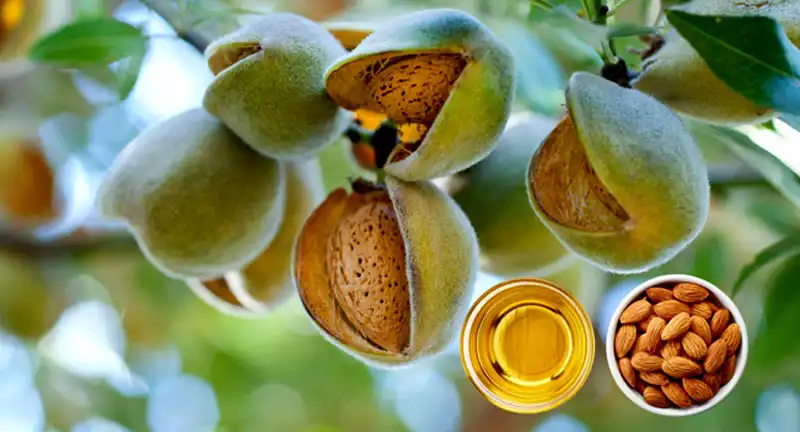
This rich Nuts ripen on the tree; when mature, the hull splits and nuts are mechanically shaken off the trees. Timing is crucial: harvesting too early leads to high moisture; too late causes quality loss.
Processing
- Hulling and shelling: After harvest, almonds are dried to the right moisture level, then hulled (remove outer hull) and shelled (crack shell to get kernel).
- Sorting and grading: Nuts are graded by size, color, and integrity. Defective or discolored nuts are removed.
- Roasting, blanching, slicing, grinding: Different processing steps create varied products: roasted almonds, blanched almonds (skins removed), almond flour, almond butter, etc.
Storage
This rich Nuts store best in cool, dry conditions. Proper packaging (vacuum or nitrogen-flushed) extends shelf life. Refrigeration or freezing increases storage life, especially for whole, raw almonds, because the oils can go rancid over time.
Nutritional composition (detailed)
Almonds are nutrient-dense. The exact values depend on variety and processing (raw vs roasted), but a typical 28 g (1 ounce) serving of raw almonds contains roughly:
- Calories: ~160–170 kcal
- Protein: ~6 g
- Total fat: ~14 g
- Monounsaturated fat: ~9 g (oleic acid prominent)
- Polyunsaturated fat: ~3.5 g
- Saturated fat: ~1 g
- Carbohydrates: ~6 g
- Dietary fiber: ~3–4 g
- Sugars: ~1–2 g
- Vitamin E (alpha-tocopherol): high — typically ~7–8 mg (a significant source)
- Magnesium: ~75 mg (good source)
- Calcium: small amount (~76 mg)
- Iron: ~1 mg
- Phosphorus, potassium, zinc: present in useful amounts
- B vitamins: small amounts (niacin, riboflavin, folate)
- Phytonutrients: polyphenols and flavonoids in the skin-antioxidant properties
- Plant sterols: contribute to cholesterol-lowering effects
Almond flour and almond butter have similar profiles but differ in fiber and fat concentration based on processing. Almond milk has much lower calories and protein per volume unless fortified or concentrated.
In addition to the edible almond nut, Almond Resin (Badam Pisin) is another almond-related ingredient traditionally used in South Asian food and wellness practices, although it is chemically different from the almond nut itself.
Medicinal and health benefits (evidence-based summary)
This rich Nuts support health in many ways- below are the commonly reported benefits, with short explanations of mechanisms:
Heart health
This rich Nuts consumption is associated with improved heart health markers:
- Lower LDL cholesterol: The combination of monounsaturated fats, fiber, and plant sterols helps reduce LDL (“bad”) cholesterol.
- Improved lipid profile: Regular moderate almond intake can modestly improve cholesterol and triglycerides.
- Antioxidant protection: Vitamin E and phenolic compounds protect LDL from oxidative damage.
- Like Flax Seeds, almonds provide beneficial unsaturated fats and can be included as part of a balanced diet focused on nutrient-rich foods.
Blood sugar control and diabetes management
This rich Nuts have a low glycemic load and are rich in fiber, protein, and healthy fats. Eating almonds with carbohydrate-rich meals can reduce post-meal blood sugar spikes and may improve insulin sensitivity over time.
Weight management
Despite being calorie-dense, almonds can aid weight control:
- Satiety: Protein, fiber, and fat promote fullness, reducing subsequent calorie intake.
- Energy absorption: Some fat remains trapped in almond cell walls and is not fully absorbed, meaning the effective caloric availability is slightly lower than calculated.
- Metabolic benefits: Regular consumption as part of balanced diet can help maintain healthy weight.
Brain and cognitive health
This rich Nuts supply vitamin E and healthy fats linked to cognitive health. Vitamin E is an antioxidant that may protect neurons from oxidative stress. Some studies associate nut consumption with slower cognitive decline in older adults.
Skin and hair health
Vitamin E and healthy oils in almonds nourish skin and may protect against UV-related oxidative damage. Almond oil is widely used topically for moisturizing, massage, and hair care.
Bone health
These nutrient-rich nuts provide calcium, phosphorus, and magnesium-minerals important for maintaining bone structure and strength. Millets are another nutritious food that can contribute minerals and other nutrients to a balanced diet that supports healthy bones.
Gut health
The fiber in almonds supports healthy digestion and acts as a prebiotic for beneficial gut bacteria.
Additional benefits
- Anti-inflammatory properties: Almonds contain bioactive compounds that may reduce inflammatory markers.
- Rich nutrient source for plant-based diets: Good source of protein, healthy fats, vitamins, and minerals for vegetarian and vegan diets.
Note: While This rich Nuts are healthful, they are not a cure for disease. Benefits accrue when almonds are part of a balanced diet and healthy lifestyle.
Culinary uses and recipes
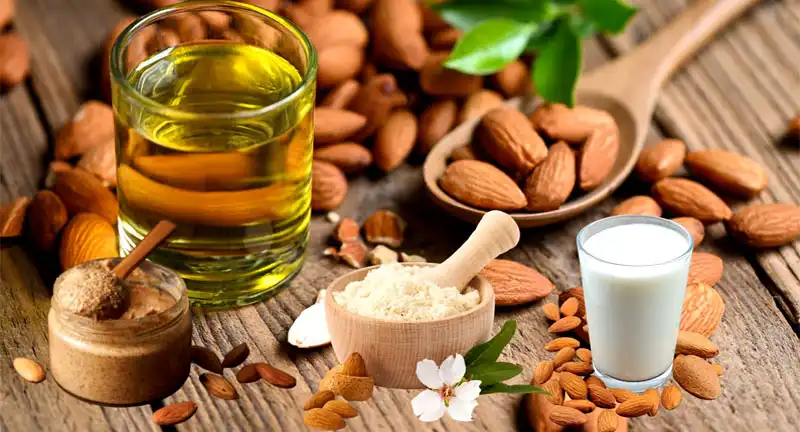
This rich Nuts are extremely versatile in the kitchen.
Common uses
- Snacks: Raw or roasted whole almonds, salted or seasoned.
- Baking: Almond flour for gluten-free cakes, cookies, and bread.
- Confections: Marzipan, nougat, pralines, and chocolate-coated almonds.
- Milks and beverages: Almond milk as a dairy alternative; almond syrup for flavoring.
- Butters and spreads: Almond butter (smooth or crunchy).
- Savory dishes: Sliced or slivered almonds in salads, pilafs, curries, and crusts for fish or chicken.
- Oils: Almond oil used in dressings and low-heat cooking.
- Garnishing: Toasted almonds for yogurt, porridge, and desserts.
Simple recipes (ideas)
- Roasted spiced almonds: Toss raw almonds with a little olive oil, smoked paprika, salt, and roast at 180°C for 10–12 minutes. Cool and store.
- Almond milk (basic): Soak 1 cup raw almonds overnight, drain, blend with 4 cups water, strain through muslin. Sweeten or flavor as desired.
- Almond-crusted fish: Crush almonds, mix with breadcrumbs and herbs, coat fish fillets, and pan-fry or bake.
Almond energy bites: Blend dates, almonds, cocoa powder, and a pinch of salt; roll into balls and chill.
This rich Nuts products and industrial uses
Beyond food, almonds and their derivatives have diverse applications:
- Almond oil: Used in cosmetics (skin creams, hair oils) and culinary uses (cold dressings).
- Almond flour: Gluten-free baking staple.
- Almond protein isolates: Emerging ingredient in plant-protein products.
- Almond shells and hulls: Used as livestock feed, bedding, biomass fuel, or industrial fillers after processing.
Flavoring: Bitter almond derivatives (after safe processing) used in small amounts for almond flavor.
How to buy, store, and prepare almonds safely
Buying tips
- Look for firm, unwrinkled nuts with a fresh aroma.
- Choose raw or roasted depending on preference; check labels for added oils, salt, or sugar.
- For baking, blanched almonds (without skin) or almond flour may be preferable.
Storage
- Keep almonds in airtight containers.
- Store in a cool, dry, dark place; refrigeration extends shelf life.
- For long-term storage, freeze in sealed bags to prevent rancidity.
Preparation
- Blanching: For recipes requiring skinless almonds, boil briefly and peel.
- Toasting: Enhances flavor-toast in a dry pan or oven and cool before use.
Grinding: Use food processors for almond flour or butter; be cautious of heat buildup.
Allergies, risks, and safety considerations
Almond allergy
Tree nut allergy is common and sometimes severe. Symptoms can range from mild itching to life-threatening anaphylaxis. People with nut allergies should avoid almonds and products that may contain cross-contamination.
Bitter almonds
Raw bitter almonds contain amygdalin, which can convert to cyanide; they are not safe to eat raw in quantity. Commercial products must be processed to remove toxic compounds.
Overconsumption
Eating extremely large amounts of almonds can contribute excess calories. Also, very high intake of vitamin E supplements (not from foods) can cause issues-but normal almond consumption is safe for most people.
Drug interactions
Almonds are food and generally safe; there are no major direct drug interactions, but if you have specific medical treatments (e.g., for blood thinning), consult a healthcare provider about dietary adjustments.
Sustainable farming and environmental considerations
Water use
Almond orchards can be water-intensive. Responsible irrigation practices (drip irrigation, deficit irrigation) reduce water footprint.
Pollinator health
Almonds rely on bees for pollination. Large-scale almond production requires careful coordination with beekeepers and attention to pesticide use to protect pollinators.
Soil and biodiversity
Sustainable practices (cover crops, reduced chemical inputs, habitat corridors) help maintain soil health and biodiversity in almond-growing regions.
Waste use
By-products like hulls and shells can be reused for animal feed, bedding, or biomass, reducing waste and increasing circularity.

Frequently Asked Questions (FAQs)
- Are almonds a good source of protein?
Yes -This rich Nuts provide about 6 grams of protein per ounce (28 g). They are a useful plant-based protein source but not a complete protein by themselves. - Do almonds help you lose weight?
Almonds can support weight management because they increase satiety and may reduce subsequent calorie intake. However, portion control is important due to their calorie density. - Is almond milk as nutritious as cow’s milk?
Commercial This rich Nuts milk is lower in calories and protein than cow’s milk unless fortified. It is often fortified with calcium and vitamins but check labels for protein content and added sugars. - Can diabetics eat almonds?
Yes, This rich Nuts have a low glycemic impact and can help blunt post-meal blood glucose spikes. They are a good snack choice for many people with diabetes, though overall diet matters. - How many almonds should I eat per day?
A common recommendation is a small handful (about 20–30 grams, or 20–24 almonds) daily as part of a balanced diet. - Are raw or roasted almonds healthier?
Both are healthy. Roasting may alter some heat-sensitive nutrients slightly, but differences are small. Avoid versions with excess added salt or sugar for best health benefits. - Can almond consumption improve skin?
This rich Nuts supply vitamin E and healthy fats that support skin health. Topical almond oil may moisturize, while dietary vitamin E helps protect against oxidative damage. - Are almonds safe for children?
Whole almonds can be a choking hazard for young children. For infants and toddlers, grind or finely chop This rich Nuts or use almond butter (thinly spread to avoid choking). Always follow age-appropriate feeding guidance. - What is the difference between almond flour and almond meal?
This rich Nuts flour is typically made from blanched almonds (skin removed) and is finely ground. Almond meal often uses whole unblanched almonds and has a coarser texture. - Can almond consumption reduce cholesterol?
Yes, regular intake of almonds as part of a heart-healthy diet has been associated with reductions in LDL cholesterol. - Are soaked almonds better than raw?
Soaking This rich Nuts softens them and can make them easier to chew for some people. Claims about dramatically improved nutrient absorption are not strongly supported; both soaked and raw almonds provide nutrients.
12. How long do almonds last?
Stored in a cool, airtight container, raw almonds can last several months at room temperature, longer in the fridge (6–12 months) and up to a year or more in the freezer.
Conclusion
Almonds are a useful, nutrient-rich food with many contemporary applications and strong cultural ties. Almonds are useful in both traditional and modern diets, from improving recipes and providing substitutes like almond milk and flour to strengthening heart and brain health. Almonds are a great complement to a balanced, healthful lifestyle when they are selected and consumed carefully, taking into account portion sizes, safety (in the event of allergies), and sustainable sources.