Groundnut:The Powerful Super Crop Fueling Nutrition and Industry
Groundnut (peanut) is a nutrient-rich legume originally from South America, now grown worldwide. It is packed with protein, healthy fats, vitamins, and minerals. Regular consumption supports heart health, weight management, brain function, and skin health, while also reducing the risk of diabetes and cancer. Groundnut is widely used in food, oil production, and traditional medicine.
Introduction
Groundnut (Arachis hypogaea), commonly known as peanut, monkey nut, goober (US) or earthnut, is one of the world’s most important food and oilseed crops. Unlike most plants, groundnut is unique because its flowers bloom above the soil while its pods develop underground, a process called geocarpy. This remarkable adaptation, along with its rich nutritional profile, has made it a vital crop for centuries.
Widely cultivated across tropical and subtropical regions, groundnut serves as a staple food, a major source of vegetable oil, and a versatile raw material for industries ranging from cosmetics and pharmaceuticals to animal feed and even biofuels. Often called the “poor man’s almond,” it is packed with protein, healthy fats, vitamins, and minerals, making it an affordable yet powerful contributor to global nutrition.
From small farmers in Africa and India to large commercial producers in China and the United States, groundnut continues to play a central role in agriculture, economy, and everyday diets worldwide.
This article explores the origin, botanical details, cultivation, nutrition, health benefits, culinary and industrial uses, challenges, and future prospects of groundnut in depth.
Medical & Affiliate Disclosure
This content is for informational purposes only and does not constitute medical advice. Always consult a qualified healthcare professional before using any herbal or natural remedies, as the results may depend on the specific area and individual. Some links in this article may be affiliate links, meaning we may earn a commission at no extra cost to you if you purchase them. It will help to improve the website.
Origin and History of Groundnut
Ancient Roots in South America
The groundnut’s history starts in South America, specifically in the countries of Brazil, Paraguay, and Peru, where it was domesticated approximately 3,500–4,000 years ago. Peanut-shaped earthenware and preserved pods found in ancient tombs during archaeological digs in Peru indicate that peanuts were prized as food and prosperity symbols.
The Journey Across the World
- 16th Century: Spanish explorers carried groundnuts from South America to Europe.
- Africa: Portuguese traders introduced peanuts along the West African coast, where the crop adapted well to tropical climates and became a staple in local diets such as groundnut stews and sauces.
- Asia: From Africa, groundnuts traveled to India, China, and Southeast Asia. In India, they became a common crop in Gujarat, Tamil Nadu, and Andhra Pradesh, and were incorporated into snacks and cooking oils. In China, peanuts became popular in stir-fries, sauces, and desserts.
United States: Introduced in the 18th century, peanuts gained commercial importance in the 19th century. In the early 20th century, agricultural scientist George Washington Carver promoted peanut cultivation and developed more than 300 uses for peanuts—from peanut butter to cosmetics and industrial products.
Today’s Global Presence
Currently, groundnut is cultivated in more than 100 countries, with major producers being:
- China (largest producer, ~40% of global production)
- India (second largest, key states include Gujarat and Andhra Pradesh)
- Nigeria and Sudan (major African producers)
- United States (notably Georgia, Alabama, Texas)
Groundnut has thus transformed from a local South American crop into a global food and economic resource.
Botanical Profile of Groundnut
- Scientific name: Arachis hypogaea
- Family: Fabaceae (Leguminosae)
- Type: Annual leguminous plant
- Growth habit: Erect or prostrate (spreading) branches
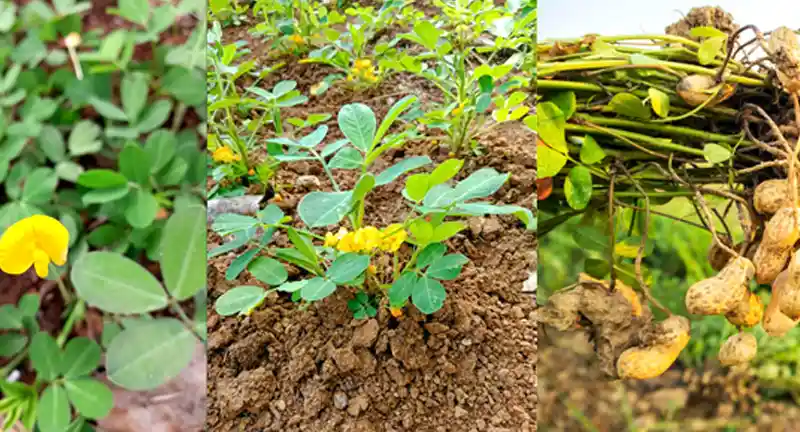
- Leaves: Compound, with four oval-shaped leaflets
- Flowers: Yellow, small, papilionaceous, and self-pollinated
- Fruiting process: After fertilization, the flower stalk bends down, and the ovary penetrates the soil. The pod then develops underground—a process called geocarpy.
- Pods: Typically 1–4 seeds inside a brittle shell
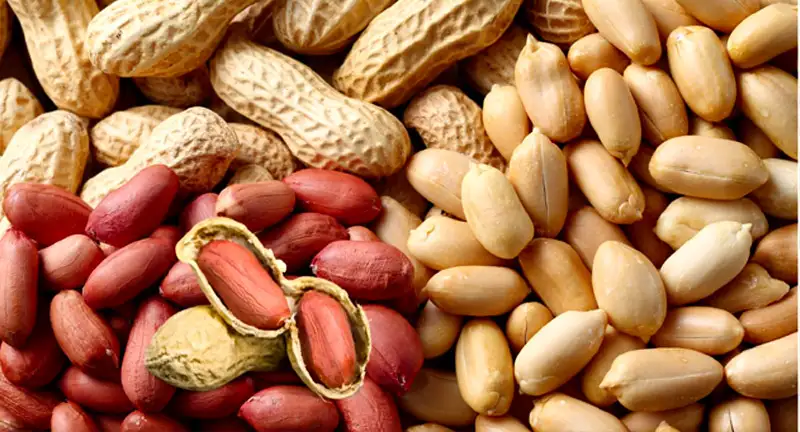
- Seeds: Covered with a thin red-brown seed coat, rich in oil and protein
This unique reproductive adaptation allows peanuts to thrive in warm climates where above-ground pods would be vulnerable to pests and heat.
Industrial Applications of Groundnut
There are numerous industrial applications for peanuts. Peanut oil is used to make nitroglycerin, paint, varnish, lubricating oil, leather treatments, furniture polish, and pesticides. Saponified oil is used to make soap, and peanut oil and its derivatives are found in many cosmetics. Certain textile fibers are made from the protein component. Plastic, wallboard, abrasives, fuel, and mucilage are all made from peanut shells.
Cultivation of Groundnut
Climatic Requirements
- Temperature: 20–30°C (optimal for growth)
- Rainfall: 500–1000 mm annually
- Growing season: Needs 90–120 frost-free days
- Light: Requires full sun for maximum yield
Soil Requirements
- Prefers sandy loam and light-textured soils that are well-drained.
- Soil pH: 5.5–7.0
Cannot tolerate waterlogging or heavy clay soils.
Varieties of Groundnut
Groundnuts are categorized mainly into four botanical types:
- Spanish type
- Early maturing
- Small, round seeds
- Used for confectionery and roasted snacks
- Valencia type
- Sweet flavor, often eaten boiled
- Popular in the United States
- Virginia type
- Large pods, late maturing
- Widely used in peanut butter and oil extraction
- Runner type
- High yield, uniform kernels
- Preferred for making peanut butter
Examples of Indian varieties: JL-24, GG-20, TG-37A, K-6, CO-3.
Nutritional Composition of Groundnut
Groundnuts are considered one of the most nutrient-dense legumes.
Per 100 g of raw groundnut (approximate values):
- Calories: 567 kcal
- Protein: 25.8 g
- Fat: 49.2 g
- Saturated: 6.3 g
- Monounsaturated: 24.4 g
- Polyunsaturated: 15.6 g
- Carbohydrates: 16.1 g
- Dietary fiber: 8.5 g
- Sugars: 4.7 g
Vitamins
- Vitamin E: 8.3 mg (antioxidant)
- Niacin (B3): 12 mg
- Folate (B9): 240 µg
- Thiamine (B1): 0.6 mg
- Pantothenic acid (B5): 1.8 mg
Minerals
- Magnesium: 168 mg
- Phosphorus: 376 mg
- Potassium: 705 mg
- Iron: 4.6 mg
- Zinc: 3.3 mg
- Copper: 1.1 mg
- Manganese: 1.9 mg
Phytochemicals
- Resveratrol (antioxidant)
- Isoflavones (plant estrogens)
- Phenolic acids (anti-inflammatory compounds)
This nutritional richness makes peanuts comparable to nuts like almonds and walnuts, but at a more affordable price.
Health Benefits of Groundnut
Groundnut is not just a food crop—it has a wide range of medicinal and nutritional benefits.
- Rich Source of Protein
- Provides all essential amino acids.
- Ideal for vegetarians and low-cost protein diets.
- Heart Health Booster
- Monounsaturated fats reduce bad cholesterol (LDL).
- Antioxidants like resveratrol protect arteries.
- Regular intake linked with lower risk of cardiovascular disease.
- Diabetes Control
- Low glycemic index helps regulate blood sugar.
- Magnesium improves insulin function.
- Weight Management
- Despite being high in calories, peanuts improve satiety.
- Help prevent overeating and support weight loss when eaten in moderation.
- Brain Function
- Niacin and Vitamin E support memory and cognitive health.
- Resveratrol enhances blood circulation in the brain.
- Cancer Prevention
- Isoflavones, p-coumaric acid, and resveratrol show anti-cancer effects.
- Studies suggest reduced risk of colon and breast cancers.
- Good for Pregnancy
- Folate prevents neural tube defects in newborns.
- Provides energy and protein for maternal health.
- Skin and Hair Health
- Vitamin E prevents premature aging.
- Groundnut oil nourishes hair and prevents dryness.
- Bone Strength
- Magnesium, calcium, and phosphorus maintain bone density.
- Digestive Health
- Dietary fiber promotes smooth bowel movement.
- Prevents constipation and supports gut microbiota.
- Immunity Boosting
- Zinc and iron enhance immune function.
- Anti-Inflammatory
Polyphenols and phytosterols reduce inflammation in the body.
Source and references :Groundnut / Peanut – Britannica
Culinary Uses of Groundnut
- Snacks: Roasted, boiled, or salted peanuts
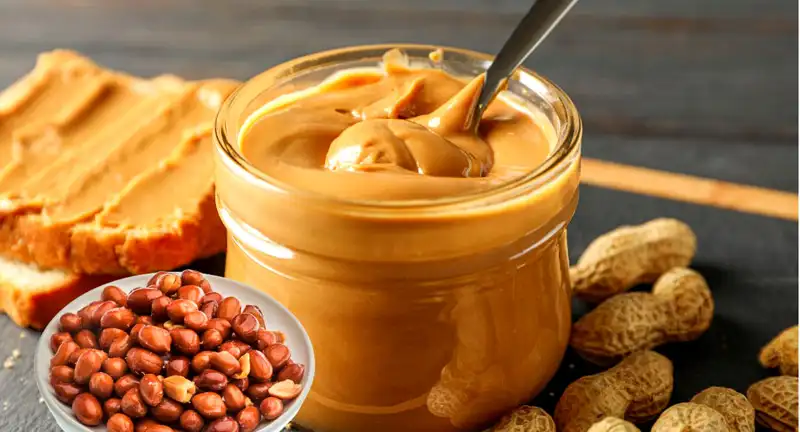
- Spreads: Peanut butter, chutneys, and sauces
- Cooking oil: Peanut oil, popular in Asian cooking
- Confectionery: Cakes, biscuits, sweets, laddoos, brittles
- Flour: Used in baking and gluten-free products
Dishes: Groundnut stew in Africa, peanut satay in Indonesia, peanut chutney in India
Culinary Uses of Groundnut in India
Peanuts are a popular light snack in the Indian subcontinent. They are typically sold roasted in pods or boiled with salt, and they are typically salted and roasted (occasionally with chilli powder added). They are also processed with refined sugar and jaggery to create peanut brittle, a dessert or sweet snack. Roasted and crushed peanuts are used in Indian cooking to provide crunch to salads and, for the same purpose, are added whole (without pods) to stews made with leafy vegetables. Peanut oil can also be used in cooking. The majority of IndiansWhen cooking, use peanut oil, mustard, and sunflower oil. Groundnut chutney is typically consumed with dosa and idli for breakfast in South India. In South India, peanuts are also used as a flavoring for tamarind rice and in savory and sweet dishes. The sweet peanut chikki or peanut brittle that Kovilpatti is famous for is also utilized in savory and sweet concoctions like Bombay mix.
Groundnut in Traditional Medicine
Ayurveda
- Considered Brimhana (body-strengthening).
- Used for treating weakness, dry skin, and malnutrition.
- Peanut oil applied externally for massage and joint pain.
Chinese Medicine
- Believed to nourish lungs and spleen.
- Used to boost fertility and improve digestion.
Folk Medicine
- Used as a remedy for skin conditions.
Oil applied to wounds and as a carrier oil for herbal extracts.
Industrial and Economic Importance
Oil industry: Groundnut oil is one of the most popular edible oils worldwide. It is valued for its mild flavor, high smoke point, and health-friendly fat composition, making it a preferred choice in cooking, frying, and food processing.
Animal feed: After oil extraction, the leftover peanut cake is rich in protein and energy, making it an excellent feed for cattle, poultry, and other livestock. It supports healthy growth and enhances milk and meat production.
Cosmetics: Groundnut oil is widely used in skincare and haircare products. Its natural moisturizing and nourishing qualities make it a key ingredient in lotions, creams, massage oils, and soaps, helping maintain soft and healthy skin.
Pharmaceuticals In medicine, groundnut oil serves as a base for ointments, creams, and certain capsules. Its stability and non-toxic nature make it suitable for pharmaceutical formulations and medicinal preparations.
Biofuel Groundnut oil is being explored as a renewable source of biodiesel. Its high oil content and eco-friendly properties make it a promising alternative to conventional fossil fuels, contributing to sustainable energy solutions.
Global trade: Groundnut is a major export commodity, contributing significantly to the agricultural economy of many countries. India, China, the United States, and several African nations are leading exporters, supplying raw peanuts, groundnut oil, and processed products to international markets
Challenges in Groundnut Production
- Aflatoxin contamination (caused by fungus Aspergillus flavus) poses health and export challenges.
- Climate change with droughts and irregular rainfall reduces yields.
- Pests and diseases such as leaf spots, rust, and aphids.
Price fluctuations in international markets affect farmers.
Future Prospects
- Development of climate-resilient, aflatoxin-resistant varieties.
- Growth in organic peanut farming.
- Rising demand for plant-based protein powders, dairy alternatives, and snacks.
Expanded use in nutraceuticals and functional foods.
Conclusion
From its origin in South America to becoming a global superfood, groundnut has traveled a long journey. Today, it is not only a nutritional powerhouse rich in protein, healthy fats, vitamins, and minerals, but also an economic lifeline for millions of farmers.With its many applications in industry, energy, cosmetics, food, and medicine, groundnuts are appropriately referred to as a “farmer’s friend and consumer’s delight.”
Groundnuts will continue to be essential to maintaining global nutrition and economic stability as the demand for sustainable, reasonably priced, and healthful foods rises.
Frequently Asked Questions (FAQs) about Groundnut
1. What is the origin of groundnut?
Groundnut (Arachis hypogaea) originated in South America, especially Brazil and Paraguay, and later spread to Africa and Asia.
2. Is groundnut a nut or a legume?
Botanically, it is a legume because it grows in underground pods, but it is commonly treated as a nut in diets.
3. What are the main nutrients in groundnut?
Groundnuts are rich in protein, healthy fats, fiber, vitamin E, and minerals like magnesium and phosphorus.
4. How are groundnuts used in Indian cuisine?
They are eaten roasted, boiled, or as chutneys, added to curries, and widely used in peanut oil for cooking.
5. What are the industrial uses of groundnut?
Groundnut oil is used in soaps, cosmetics, paints, and even biofuels, while peanut cake serves as animal feed.
6. Are groundnuts good for heart health?
Yes, the healthy fats in groundnut can help lower bad cholesterol and support heart function when eaten in moderation.
7. Which countries are leading in groundnut trade?
India, China, the U.S., and several African countries are top producers and exporters of peanuts and peanut oil.
8. Can groundnut be used for animal feed?
Yes, peanut cake is a protein-rich feed for cattle and poultry.